
Most of us are familiar with the Lord’s Prayer:
Our Father which art in heaven,
Hallowed be Thy name.
Thy kingdom come.
Thy will be done in earth as it is in heaven.
Give us this day our daily bread.
And forgive us our debts, as we forgive our debtors.
And lead us not into temptation,
But deliver us from evil.
For Thine is the kingdom and the power and the glory forever. Amen. (Matthew 6:9-13)
It is a beautiful prayer. A simple prayer. A model prayer.
Jesus teaches us how to pray to our heavenly Father. No public show. No long-winded monologues. No vain repetitions. No pretense. No pride. No hypocrisy.
The prayer as a whole has seven petitions. The first three are focused on God. The next four are focused on our own needs and requests.
- Let Your name be set apart and magnified.
- Let Your kingdom come to earth.
- Let Your will be done on earth just as it is done in heaven.
- Give us this day our daily bread.
- Forgive us our debts as we forgive our debtors.
- Lead us not into temptation (or into the place of testing).
- Deliver us from evil (and the evil one).
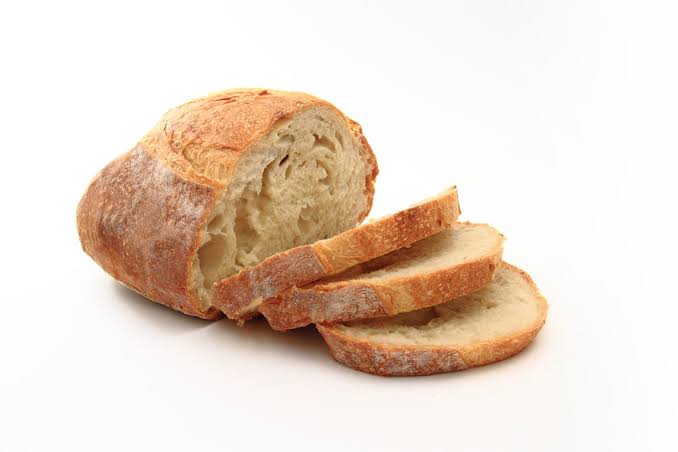 Sitting right in the middle, connecting our focus on God’s glory and our own practical needs, is the request for “daily bread.” You could say it is the heart of the prayer.
But what does it mean?
On the surface, it is simple. As we face a new day, we are asking God to give us the sustenance that we need for the day. Provide for us. Guide us. Strengthen us.
But what makes the request so intriguing is the one word translated “daily” in English. In the original Greek language, it is the word, epiousios. This Greek word is only found, in all the known ancient Greek language, in this prayer, as recorded in Matthew and Luke’s gospels (Matthew 6:11; Luke 11:3). In other words, we do not know exactly what it means. It appears to be a word crafted and created specifically for this prayer…and used nowhere else.
Theologians have debated its meaning for centuries with no firm conclusions.
Etymologically, the word appears to be the combination of two Greek words, epi- and ousios. Epi is a prefix, a preposition, that generally means “upon, over, above.” We can recognize it in such English words as epidermis (“over skin”) and epitaph (“over a tomb”).
The second part of the word, ousios, is a little harder to discern. It is a Greek word that carries such meanings as “substance, being, essence, or existence.”
So putting these two parts of the word together, we have something like “over substance” or “upon being” or “above essence.”
You can see the difficulty in understanding the exact meaning of the word.
But though the exact meaning is enigmatic, most Bible scholars acknowledge that, whatever the word means, it alludes back to the idea of manna in the Old Testament.
In Exodus 16, God’s people are starving. They are without bread and out in the middle of the desert. There are no resources available. There is no grocery store nearby. They are in dire straits. And like they do so often, they start to complain and grumble and question why Moses (and God) had ever led them into such a desolate land and a miserable existence.
Moses cries out to God and God does something miraculous. He rains down bread from heaven. Every morning, as the dew evaporates, there is a layer of bread all over the ground. It is wafer-textured, coriander seed-looking, honey-flavored bread.
Psalm 78:25 calls it “the bread of angels.”
It had to be the most nutritious, delicious, healthy food that man ever tasted and ate. It was what we would call a “superfood.” Or more accurately, a “super-superfood.” It was beyond anything that man had ever seen before. In fact, the name “manna” literally means “what is it?”
Every morning…every day…for forty years while the Israelites are in the wilderness, God provides them with just the right amount of bread that they need for the day. Nothing more, nothing less. Exactly sufficient for the day.
Knowing this background helps us understand the meaning of epiousios. It means something like “super-substance,” something that comes from above, something that comes upon you, from outside you, giving you the exact strength and sustenance that you need for the day.
No wonder the Gospel writers had to invent a new word!
So now what does it mean from a practical standpoint? How do we find this “super-substance”? How do we experience this “above-sustenance”?
Our Catholic friends point to the Eucharist. It is an interpretation that has been around since the 4th century with the writings of Ambrose, Augustine, and Jerome. After all, what else could “super-substance bread” be? But this interpretation fails on many accounts. First of all, the disciples would have absolutely no idea what this would mean. The Eucharist was nowhere in their thinking at this time. Plus, the very idea that Jesus is saying that every day you need a priest to transubstantiate bread into the body and blood of Jesus so that you can eat it every day of your life goes against the very simplicity and practicality that Jesus is teaching in this prayer. This kind of interpretation is called eisegesis, reading into the text what you want to read into the text.
Instead, we go back to the story of manna in the wilderness. This is what Jesus would be alluding to. This is what the disciples would be thinking. This story would be ingrained in their heads from the time that they were young.
Deuteronomy 8:3 makes it clear what God was teaching Israel through the gift of manna.
And He humbled you and let you hunger and fed you with manna, which you did not know, nor did your fathers know, that He might make you know that man does not live by bread alone, but man lives by every word that comes from the mouth of the Lord.
In Jesus’ own experience in the wilderness (in Matthew 4 which immediately precedes the Sermon on the Mount), He makes it abundantly clear what enables a person to endure testing, withstand temptation, and overcome the evil one.
It is written…It is written…It is written…
In fact, Jesus’ first temptation was to turn stones into bread and He replied with the words of Deuteronomy 8:3. Man shall not live by bread alone but by every word that proceeds from the mouth of God.
It is the Word of God that is our daily manna from heaven.
The Word of God is our bread, our milk, our meat, our light, our sword. Our sustenance, our guidance, our protection for each day.
God created the entire universe with His spoken Word. He presently sustains the universe with His spoken Word. Upholding all things by the word of His power (Hebrews 1:3).
Even physicists are beginning to recognize that when you examine the universe down to its most basic level you find two things…energy and information. The universe around us is literally pulsating and proclaiming the Word of God.
David sang about the Word of God, saying that it converts the soul, makes wise the simple, rejoices the heart, and enlightens the eyes. It is more valuable than gold and sweeter than honey. (Psalm 19)
Honey-flavored manna.
So what am I asking for every day?
I am asking God to give me the sufficient, sustaining, strengthening sustenance that comes from His Word.
I need to know His truth every day. I need to hear from Him. I need to meditate on His Word, chew on it, digest it, make it part of my daily diet.
The blessed person is the one who delights in God’s Word and meditates on it day and night. He will be like a tree planted by rivers of water, bringing forth fruit in its right season, never withering, always flourishing. (Psalm 1)
All people are like grass,
and all their glory is like the flowers of the field;
the grass withers and the flowers fall,
but the word of the Lord endures forever. (1 Peter 1:24-25)
Lord, each day, give me Your super-sustaining, super-essential, super-strengthening Word to help me through the day. May I latch onto Your truth. May You put a verse, a song, a promise from Your Word into my heart that will carry me through the difficulties that I will face and enable me to overcome every temptation and trial that comes my way.
Give me this day my daily bread.
Give me Your truth.
Give me Your Word.
Give me Jesus.


Oh my word! Thank you for these words! And thanks and praise be to to God for His powerful and holy WORD!!!