Reflections on the End Game

I saw the Avengers: Endgame yesterday.

It is a movie that continues to shatter box office records…biggest opening weekend domestically ($350 million)…biggest opening weekend globally ($1.2 billion)…fastest movie to $1 billion in box office sales…and it is likely to be the highest grossing movie of all-time by the time all is said and done.

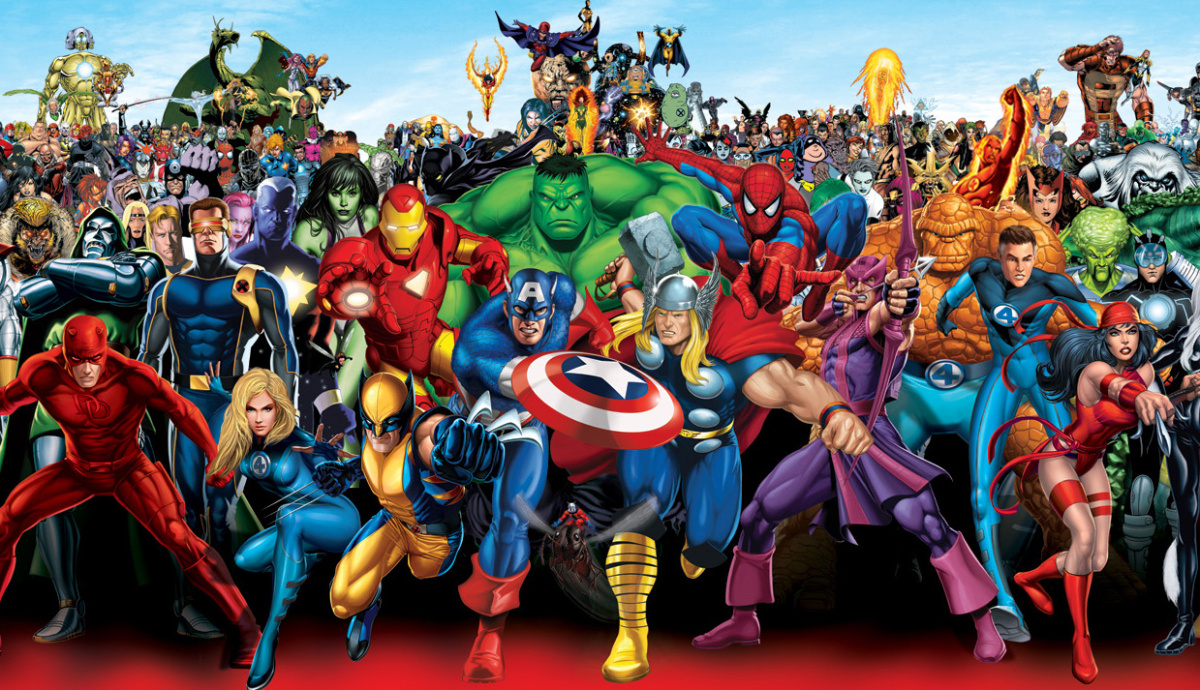
It is a well-done movie. A blend of humor, action, special effects, and a great story line…culminating an eleven-year saga featuring twenty-two Marvel films. I am amazed at how they wove all twenty-two movies…and multiple characters…into a coherent, climatic finale.

I have seen most of the twenty-two films.

I was a comic book reader as a kid. I had almost all of the issues of Spider-Man, the Hulk, Iron Man, and Captain America…along with Archie and Richie Rich…before I knew that collecting them was a potential future financial investment. Most of mine were read to shreds and cut up for my own comic book compilations. I wish someone would have told me to put them in plastic protectors and stash them away in the attic to be unearthed at the present time.

But my childhood fascination with superhero comic books is nothing compared to the worldwide, multi-generational fascination with superhero movies today.

Our culture is practically addicted to superhero movies. And it is not just our culture. People throughout the whole world are enamored and enthralled with their stories as well.

Superhero movies have touched a nerve that resonates in the human psyche…particularly in this present age.

I wonder why.

Here are my thoughts:

1. We live in chaotic, perilous, uncertain times.

The emergence of superheroes dates back to the 1930s and 40s in America, the time of the Great Depression and the beginning of World War II. As one comic book historian noted:

In the 1930s, the American Dream had become a nightmare, and I think comic books and superheroes in particular provided an escapist form of entertainment that allowed the American public to go into a fantasy world where all the ills of the world were righted by these larger-than-life heroes. (Erin Clancy, curator at the Skirball Cultural Center)

Superheroes not only offer us an entertaining form of escape from our present distresses but they also touch a deep desire in us for a leader or a “hero” who can stand for “truth and justice” and have the power to correct all that’s wrong in our lives and in our world.

2. We are drawn to great stories.

Give it to Marvel. They know how to tell a great story. (Unlike DC…which seems to hope that their endless special effects and smoldering movie stars (aka, Aquaman) can somehow suffice.) The three hours of Endgame were not overloaded with non-stop special effects, sensuality, or violence. They told a real story. They wove together various characters, various plot lines, various relationships into an emotional, humorous, somewhat believable narrative.

We are a “story people.” We love stories. We are drawn into stories. Our own lives are stories.

And superhero movies capture some of the elements that we long for in a story. The triumph of good over the evil. The strength of a hero. The excitement of adventure. The importance of family and friendships. The rescuing of what is in jeopardy. The restoring of what is lost.

3. We long for redemption.

Here is the gist of most superhero movies. Our world is in trouble. Humanity is threatened by a power or an enemy that is beyond its own capability to defeat. There are heroes among us who have special power and ability to defeat the enemy. And these heroes are willing to sacrifice everything out of a sense of “right-ness” and love to achieve victory.

Isn’t that what Endgame…the climax of the past twenty-two Marvel movies…came down to?

Thanos (a shortened form of the Greek word for “death”) has a power that is beyond collective human strength. He is unstoppable. Inevitable. Time…Soul…Reality…Power…Mind…Space…all come under his influence. He takes away all that is dear to our hearts. All that is loved.

We are helpless and hopeless. And we cannot save ourselves.

But then the superheroes step in with a super-human strength and courage to fight him…to defeat him…for the sake of restoration…even resurrection…of all that is lost.

Ultimately it takes the sacrifice of one hero to defeat Thanos (I won’t totally spoil the climax by saying who).

It takes a death to defeat Death.

Isn’t that interesting?

And looking beyond Endgame, isn’t it interesting that the stories that we love all seem to follow a similar plot line? Protagonist. Antagonist. Rising conflict. A point of desperation when all seems lost. Then a soul-satisfying, enemy-nullifying, conflict-rectifying climax that brings all things back together.

I believe that this story resonates in our hearts because it resides in our hearts.

We do live in a world that is broken. We do have an enemy that we cannot defeat. We do need Someone with a strength beyond our own to enter our world and to save it. We do need redemption…a selfless sacrifice that can rectify all that is wrong.

The best a superhero movie can offer us is a return to “normal.” The world that is saved in Endgame is still a world with immorality, violence, disasters, conflicts, and death. And, as good of a movie as it is, it still leaves us longing for more.

In the real endgame, we need a hero much greater than Iron Man or Captain Marvel.

And surprisingly…unexpectedly…marvelously…God’s Hero comes as a Lamb.

One who conquers with His own blood.

Who dies in our place.

Who rises again.

To defeat our real enemies of sin and death.

And to restore this world…not back to “normal”…but to its original.

Paradise.

No more tears…no more sorrow…no more pain…no more death.

This is the real story.

The story that we live in.

And this is ending we are longing for.

Posted in Random Thoughts | Leave a comment

The Cross Is Not a Religious Symbol

Whatever you want to say about the cross, it is not a religious symbol.

At least it wasn’t intended to be.

The cross was not designed to give us warm fuzzies about religion…or make us feel better about ourselves…or be used as a religious symbol to ward off evil…or even worn as a golden piece of jewelry.

The true nature of the cross is a skandalon (Galatians 5:11)…a scandal…an offense…a stumbling block…because it contradicts everything we think we know about religion…about God…about ourselves.

At the most fundamental level–and this can’t be emphasized too strongly–the cross is in no way “religious.” The cross is by a very long way the most irreligious object to ever find its way into the heart of faith. J. Christiaan Becker refers to it as “this most nonreligious and horrendous feature of the Gospel.” The crucifixion marks out the essential distinction between Christianity and “religion.” …The cross is “irreligious” because no human being individually or human beings collectively would have projected their hopes, wishes, longings, and needs onto a crucified man. (Fleming Rutledge)

We have sanitized the cross too much.

As a means of execution, crucifixion was designed not only to prolong physical pain and suffering as long as possible, but it was also designed to degrade and dehumanize its victims to the lowest possible degree.

It was reserved for the lowest of all humans.

It was reserved for the dregs of society.

No Roman citizen could be crucified…only slaves and those with absolutely no social standing.

It was the ultimate pronouncement for all the world to see…”This man is utterly worthless. Only worthy of scorn and derision.”

In theory, Christ could have died in another way. He came as the Lamb of God to die as our substitute. The Old Testament sacrifices were killed quickly and without undue suffering. It was their blood that provided the cleansing for one’s sin…their death that provided the substitute for one’s life.

Yet Christ chose to be crucified.

Let this mind be in you which was also in Christ Jesus,
Who, being in the form of God,
Did not consider it robbery to be equal with God,
But made Himself of no reputation,
Taking the form of a bondservant,
Coming in the likeness of men.
And being found in appearance as a man,
He humbled Himself and became obedient to the point of death,
Even the death of the cross. (Philippians 2:5-8)

Why?

Crucifixion represented humanity at its worst…humanity not only executing someone but rendering a judgment on their worth as a human being…not only killing them but making them suffer in every way imaginable.

Crucifixion as a means of execution in the Roman Empire had as its express purpose the elimination of the victims from consideration as members of the human race. It cannot be said too strongly: that was its function. …Crucified persons were not of the same species as either the executioners or the spectators and were therefore not only expendable but also deserving of ritualized extermination. …The specific role of the passersby was to exacerbate the dehumanization and degradation of the person who had been thus designated to be a spectacle. Crucifixion was cleverly designed–we might say diabolically designed–to be an almost theatrical enactment of the sadistic and inhumane impulses that lie within human beings. (Fleming Rutledge)

Even in the Jewish mindset, to be hung on a tree…to have one’s death displayed as an advertisement of execution…was the ultimate sign of being a cursed individual…unworthy of life…unworthy of even a proper death.

Christ redeemed us from the curse of the law by becoming a curse for us, for it is written: “Cursed is everyone who is hung on a tree.” (Galatians 3:13).

The depravity of humanity…the cruelty of degradation…the judgmental hatred of the human heart…the curse of sin…the shame of iniquity…the excruciating pain of suffering…the sting of death…were all wrapped together in the crucifixion of Christ.

The worst that sin can be is shown on the cross.

The worst that humanity can be is shown on the cross.

That is why seeing the cross as a “religious symbol” does a disservice to its true intent.

It was meant to cause revulsion not devotion.

It was meant to display a curse not a blessing.

It was meant for the lowest of all possible human beings…not even worthy of being called a human…not a hero, not a savior, not a messiah, not a king.

God, in the person of his sinless Son, put himself voluntarily and deliberately into the condition of greatest accursedness–on our behalf and in our place. This mind-crunching paradox lies at the heart of the Christian message. (Fleming Rutledge)

God entered our world and we crucified Him.

The cross is not a religious symbol. It is a declaration that we do not need God…that we do not want Him…that we want to figure out life on our own…that we love our independence too much to bow to our Creator.

And remarkably…unfathomably…God allowed Himself to be crucified by us…in order to die for us.

God took all our sin…all our curse…all our shame…all our suffering…all our death…in order to give us His righteousness…His blessing…His glory…His peace…His life.

The enormity of sin and the incomprehensibility of grace intersect at the cross.

For He [God] made Him [Jesus] who knew no sin to be sin for us, that we might become the righteousness of God in Him (2 Corinthians 5:21).

God loved you at your worst.

God sought you when you least deserved it.

God bore all your sin.

God endured all your shame.

God suffered all your pain.

God became your curse.

God died your death.

To make you His own.

To make you new.

That is not religion…that is redemption.

And that is the message of the cross.

And I pray that you, being rooted and established in love, may have power, together with all the Lord’s holy people, to grasp how wide and long and high and deep is the love of Christ, and to know this love that surpasses knowledge—that you may be filled to the measure of all the fullness of God (Ephesians 3:17b-19).

Posted in The Cross of Christ | Leave a comment

Missing the Point

Reading through John 9, I was struck again by the disciples’ question to Jesus.

Now as Jesus passed by, He saw a man who was blind from birth. And His disciples asked Him, saying, “Rabbi, who sinned, this man or his parents, that he was born blind?” (9:1-2)

Jesus and His disciples pass by a blind man on their way out of the temple mount. The blind man was probably begging for money from the temple goers (9:8).

Seeing the man…and realizing the difficult condition that he was in…a life of living in physical darkness and perpetually begging for money…the disciples ask one of the big theological questions of their day.

Who sinned? Him? Or his parents? What is the cause of his difficulty? Why is he in this pathetic condition? Is it his fault or is it rooted in some kind of generational sin?

The disciples ask the wrong question…and then give Jesus two wrong options for their wrong question.

They are so far off from the real issue that they don’t even realize it.

In their minds, the situation has to be the result of A or B. They couldn’t even fathom a C option. More than that, they couldn’t comprehend that the whole basis for their question was rooted in a short-sighted, human-level, black-or-white kind of perspective.

Sometimes our A or B options…which we think cover the gamut of an issue…are not only inadequate…they are in the totally wrong ballpark! It would be like showing up at a stadium and saying, “Are the Astros playing the Yankees or the Red Sox tonight?” And the lady at the ticket office saying, “Sir, you are in Toronto. At a football stadium. And the Argonauts do not play until June.”

Jesus answered, “Neither this man nor his parents sinned, but that the works of God should be revealed in him” (9:3).

Jesus blows the disciples’ categories out of the water.

The blind man’s condition has nothing to do with his personal sin or his parent’s sin. His condition was part of God’s bigger plan for his life…part of a bigger story…a story that spans from everlasting to everlasting…a story centered on the redemptive work of Jesus Christ. And this guy, despite his lifelong handicap and apparent “bad fortune,” actually gets a front row seat to the story. He gets to be the man who receives sight…who is healed by Jesus…who finds eternal life…who becomes a witness through the centuries of Jesus’ power and glory.

The story is bigger than our categories.

The story is bigger than time.

The story is bigger than us.

And we simply can’t fathom it all.

If we can’t see the picture from an eternal perspective, then we really can’t see. Think about it. How can you ever properly judge whether an event is good or bad if you can’t see the far-reaching implications of it? How can you even determine if your “advice” to someone or your “act of kindness” is really beneficial to them unless you see from a long-range, eternal perspective?

What looks good from a limited human perspective may actually turn out to be eternally destructive. What looks bad from a limited human perspective may actually turn out to be be eternally beneficial.

Truth and love can only be measured on an eternal scale.

Only Someone who sees the whole story can accurately tell us what is true…what is good…who we are…what we need…why we were created…how we are to live.

Is it possible that our categories are too small?

We get caught up in political issues…is it A or B? God invites us to see from an eternal, kingdom perspective. Every political group in Jesus’ day wanted to nail Him down. Are you a radical zealot ready to overthrow the Romans? Are you a religiously conservative Pharisee? Are you a religiously liberal Sadducee? What category do You fit in? Who are You going to align with? And Jesus disappointed and angered them all.

We get caught up in theological debates…is it A or B? Calvinism or Arminianism? Charismatic or non-charismatic? Young earth or old earth? Pre-millennial or A-millennial? Important debates with theological implications. But is it possible that our options are too small? That our formulations are too humanly logical? That our perspective is too limited?

Think about it. The chair you are sitting in right now is 99.999999% empty space held together by energy…and you are spinning at a 1000 mph right now sitting on the side of a giant ball suspended on nothing…hurtling through space at 500,000 mph. You can’t “see” any of these things…you can’t “feel” them. Your perspective is skewed and off-base using your natural senses…and you don’t even realize it.

That in itself should give you pause if you think you have everything figured out.

For now we see in a mirror, dimly, but then face to face. Now I know in part, but then I shall know just as I also am known (1 Corinthians 13:12).

“For My thoughts are not your thoughts, Nor are your ways My ways,” says the Lord (Isaiah 55:8).

Oh, the depth of the riches both of the wisdom and knowledge of God! How unsearchable are His judgments and His ways past finding out! (Romans 11:33)

Knowledge puffs up, but love edifies. And if anyone thinks that he knows anything, he knows nothing yet as he ought to know. But if anyone loves God, this one is known by Him (1 Corinthians 8:1b-3).

Jesus confronted His disciples’ limited perspective and invited them to see everything through the lens of God’s glory…to see everything from an eternal perspective…to see all of life with spiritually-open eyes that bask in the beauty and power of God’s grace in redemption.

He invites us to do the same.

This is what it means to really see.

And Jesus said, “For judgment I have come into this world, that those who do not see may see, and that those who see may be made blind.” Then some of the Pharisees who were with Him heard these words, and said to Him, “Are we blind also?” Jesus said to them, “If you were blind, you would have no sin; but now you say, ‘We see.’ Therefore your sin remains.” (9:39-41)

Posted in John Devotionals | Leave a comment

Waking Up with Bells Palsy

From March 10-31, 2019, I spent 21 days at a pastor’s retreat center without phone, internet, emails, or media. It was the “monk phase” of my sabbatical, spending time alone with the Lord, reading through the Bible, praying, journaling, writing, reflecting, recalibrating.

The Lord taught me a lot…about Himself…about myself.

I learned to see His glory throughout creation…throughout the day.

I learned how addicted I am to distractions…how long a day actually is…how hard it is to focus and to rest.

I learned how abundant and amazing His grace is to me each day.

Near the end of the 21 days, God gave me a unique “gift” that I am still trying to figure out.

Bell’s palsy.

Things started around day 10. I felt fluid deep in my left ear. As I chewed, my ear would pop on occasion. Every once in awhile, a deep piercing pain would hit my ear.

After a few days with these symptoms, I bought an ear irrigation kit and started taking an antihistamine/decongestant. I also started taking ibuprofen and aspirin periodically. The symptoms seemed to lessen so I didn’t worry about it. Living in a cabin among eighty acres of pine trees spitting out yellow pollen, I figured whatever I was dealing with was related to allergies.

On day 17, the ear pain was becoming more consistent and more noticeable. I was worried that I was developing an ear infection. Not wanting things to worsen, I decided to visit an urgent care facility that was 25 miles away. The doctor looked at my ear but didn’t see any signs of infection. She did recommend a full ear irrigation…which felt good and actually helped my ear to pop. She also recommended Flonase to help clear up any blockage in my Eustachian tubes. I bought the Flonase and started taking it that afternoon.

I would still get the piercing pain shooting through my ear at times but, for the most part, I seemed to feel better.

On day 19, I noticed a bad taste in my mouth. I thought it was the Flonase starting to work through my sinuses so I decided not to take it that day. I played nine holes of golf that afternoon and enjoyed spending the time out in the sun, walking the course, and hitting some golf balls. That evening during dinner, I noticed that the taste in my mouth was still bitter. I also noticed that the left side of my lip felt numb and that I kept dribbling water on myself as I drank.

I took a shower that night and noticed that I could not shut my left eye all the way. I kept getting soap in it and, when I would wipe it with the wash cloth, I could tell that it felt numb to some degree.

I thought I must be having an allergic reaction to something…possibly to some kind of weed or plant growing on the golf course. I took two antihistamine pills to make sure nothing more serious developed during the night…especially since I was far away from any kind of medical help.

I slept well and woke up thinking that I must be better.

But as I sat up in bed I noticed that the left side of my face still felt weird…almost like I had just gotten a novocaine shot at the dentist.

I walked to the bathroom mirror and took my first look at my morning face. It was the worst I have ever seen…which is saying quite a lot! The whole left side of my face was practically paralyzed. I couldn’t shut my left eye all the way and I couldn’t move the left side of my mouth. My first thought was, “Am I having a stroke?!” That is not the best thought to have when you are 50 years old and sitting in a cabin by yourself in the middle of nowhere, Louisiana.

I didn’t quite know what to do. Besides the left side of my face not working, I could still function. I actually felt fine…though emotionally I wasn’t sure what I was feeling. Fear. Worry. Confusion. Dread. Is this something serious? Permanent? Life-altering?

I quickly got dressed and walked over to the main house of the retreat center. The older couple running the retreat center were at the breakfast table. They came to the door and noticed the concern…and strange look…on my face. Trying to get used to my half-working lips, I said, almost sounding like Daffy Duck, “Somethin’ is wrong with my fffface. I’m goin’ back to the doctor.”

Thankfully, they were familiar with Bell’s palsy and immediately said, “It looks like you have Bell’s palsy. My sister has had that several times. It should clear up after a few weeks but it would be good to go to the doctor.”

Bell’s palsy.

The term vaguely rang a bell in my mind (no pun intended). I couldn’t think of anyone I knew that had it but at least it didn’t sound as serious as a stroke. The idea that it should clear up in a few weeks was also comforting…though the operative word “should” was concerning at the same time.

I drove to the urgent care facility with a multitude of thoughts on my mind. What is Bell’s palsy? How did I get it? What is the prognosis? Will this have any long-term implications? Will this urgent care facility even be able to help?

When I walked into the urgent care facility, the doctor I saw a few days earlier saw me come in. As I began to talk to the receptionist, doing my best not to spray her with saliva as I talked, the doctor motioned to one of the nurses to get me into an examination room. Within a few minutes she came in and said, “As soon as I saw you come in, I could tell you had Bell’s palsy. It is not uncommon and it explains the ear pain you had a few days ago. That is sometimes how it starts. I am going to put you on a high dose of steroids and an antiviral medication. It should clear up in a few weeks.”

There was that word “should” again.

I asked, “Is there a chance that it doesn’t clear up?”

She said, “Most people return to normal function in two weeks. For some it takes a few months to get full function back. There are a few rare occasions where there is permanent damage to the facial nerve but I don’t think that will be your case.”

That was comforting…though the idea of a “rare case” with permanent damage lingered in my mind…especially when you are a pastor who speaks and teaches and interacts with people regularly.

I picked up the medicines from the pharmacy and took my first dosage as soon as I got back to my car. I wanted to make sure to do everything I could to protect my facial nerve and help it heal quickly.

Before that day, I couldn’t have even told you that I had a facial nerve. It was nothing I had ever thought about. I had no idea that a facial nerve running underneath your ear controlled the function of one half of your face…and when that facial nerve is irritated or compressed in some way then you no longer have the ability to raise your eyebrow, close your eye all the way, wrinkle your nose, smile, or move half of your lips.

I bought eye drops to keep my eye lubricated. I also bought an eye patch to wear at night since I couldn’t close my eye all the way.

The vision in my left eye is blurry.

The taste in my mouth is a little weird.

My left ear is super-sensitive to loud sounds.

I have to hold my left lip up while I drink in order to prevent dribbling. I have to pry my lips open on the left side if I am taking a big bite of food. It is hard to clear food from the left side of my mouth so I mainly chew on the right side. I find myself biting my left lip if I chew too fast since I guess it doesn’t have enough strength or sense to move out of the way.

Saying the letter “P” or “F” is difficult.

I can’t drink out of a straw because my lips can’t make a tight seal.

I can’t swish water in my mouth without it spewing everywhere.

My smile is crazy crooked. And I talk out of one side of my mouth…literally not figuratively.

Those are the symptoms of Bell’s palsy as I have experienced it.

Today is the two week mark.

The function of my face is returning. I can shut my left eye fairly tight though I still tend to get soap in it when I take a shower or wash my face. My lips are starting to function better. I speak better. I dribble less. I can almost raise my eyebrow and wrinkle my nose like the right side of my face.

I am thankful for my left facial nerve…and that it is starting to work again.

Have you ever thanked God for your facial nerves? Like most things in the body, we take them for granted until they stop functioning properly. We take so much for granted every day.

But the questions that linger in my mind are “why did I get Bell’s palsy?” and “why did I get it right at the end of my monk retreat?” Was there a message in the timing? Did God want me to learn something as I returned back to normal life, back to ministry?

The first lesson that comes to mind is…Don’t get too worried about your appearance because God can paralyze half your face whenever He wants to. It is hard to worry about your looks or your image or your appearance when half your face suddenly stops working.

But I think there is a bigger lesson to be learned. Our image is so tied to our face. There is a reason that social media’s giant is called “Facebook.” Our face is our identity to some degree. When we show pictures of ourselves, it is usually of our face. Who would want to have a whole social media profile on “Feetbook” or “Back-of-the-head-book”?

We put a lot of stock in our image…in our face.

Social media has only amplified and magnified that reality.

And it is killing us.

How much of our anxiety…worry…anger…angst…depression…is related to our perceived image before others?

When we are driven by our image…how we appear to others…how we are seen by others…then we miss the substance of life.

It is interesting that in Isaiah’s prophecy of the coming Suffering Servant, he describes a Man whose “visage”…His appearance…was “marred more than any man” (52:14). Isaiah goes on to say:

He has no form or comeliness;
And when we see Him,
There is no beauty that we should desire Him.
He is despised and rejected by men,
A Man of sorrows and acquainted with grief.
And we hid, as it were, our faces from Him;
He was despised, and we did not esteem Him
(Isaiah 53:2b-3).

There is a reason that in all four Gospels we are never given a physical description of Jesus. In our modern culture, that would be the first thing that we would describe. But in God’s Word, it is not the focus…it is not even a concern.

Man looks at the outward appearance but the LORD looks at the heart (1 Samuel 16:7b).

God sees us for who we are. He sees past the outward flesh to the inward heart. He sees our secret thoughts, our fears, our doubts, our struggles, our motives. He sees the substance of who we are…not the image that we work so hard to portray.

And He loves us…at a level that we cannot fathom.

His Son proved that by taking on this human flesh…without any physical beauty or majesty…and dying in our place.

So that we could live for things more important than image.

So that we could find the life that is truly life.

Even with a crooked smile and a half paralyzed face.

Posted in Random Thoughts | 13 Comments

21 Days of Monk-dom

I recently returned from a 21 day “monk retreat.” It wasn’t stringent monk-dom. I ate well (more than bread and water)…slept in a nice bed (no horsehair mats)…and still talked and interacted with people (no vow of silence). But based on 21st-century life, it was a drastic change of pace. No phone. No internet. No emails. No media. It was basically me, my Bible, and my journal.

I went to Abbie Lane Retreat Center in Coushatta, Louisiana. It is in a remote location in the middle of 80 acres of pine trees. The retreat center is designed for pastors who need time away with the Lord. The cabin is small but comfortable with a small kitchen, sitting area, desk, and outdoor porch. Walking trails, prayers gardens, and a chapel offer opportunities for worship, solitude, and connection with God.

My goals were pretty straightforward. Rest. Enjoy time with the Lord. Read through the Bible. Journal. Write. Reflect. And de-tox from constant media distractions.

I wanted God to meet me where I am in my life…refresh my soul…remind me of His abundant grace…recalibrate me.

And He did.

Here are five things that I learned from the experience.

1. There is a lot more time in the day than we realize.

The first day I woke up without any pressing sense of responsibility. I had the whole day to spend time alone with the Lord. I began at 6am reading through a Chronological Bible (a Bible arranged historically from Genesis to Revelation). After an hour of reading, I stopped, reflected, and prayed. Then I went for a long prayer walk, using some of the prayer gardens to spur my mind toward prayer. When I returned to the cabin it was around 9am. I remember thinking, “Wow, now what do I do?!” The three hours of reading, reflecting, and praying were incredibly refreshing but the day was only beginning and I had nothing else on my agenda. I thought to myself, “This is going to be the longest 21 days of my life!”

When there are no responsibilities on your plate and no distractions vying for your time, twenty-four hours can feel like a small dose of eternity.

2. We complain about responsibilities and distractions but actually like them.

Sitting there on the first day with extended opportunities of “free time” made me hunger to check my phone, check some emails, read some articles online, watch some sports, or do something to “fill the time.” I felt like I needed a break…when I was already on a break! I had a craving for distraction. I realized that, in many ways, I was experiencing a “media de-tox.” I don’t consider myself “addicted” to media. I set pretty good limits on my online time. I rarely watch TV except for sports. I am not a big movie buff. But having access to instant information has almost become an addiction to me. If a thought strikes my mind, something inside says, “Let me look that up on Google.” I want to check weather, check sports scores, see the latest news headlines, answer the endless list of emails. I hunger for information…even when it is fairly useless information.

Blaise Pascal, a brilliant French mathematician and a committed believer in Christ, once said, “All of humanity’s problems stem from man’s inability to sit quietly in a room alone.” I am not sure what inspired him to say it but he certainly touched on something deep in our souls. We complain about distractions but then seek them out with abandon. We complain about not having time to ourselves but then pack our schedules and our time to make sure we don’t have it.

To sit quietly alone is to sit quietly with oneself. To listen to one’s own thoughts. To deal with one’s own fears. To reflect on one’s own life. The inner quiet can be unsettling. You cannot run away from yourself. You have to live with yourself. And sometimes you simply aren’t quite sure what to do with yourself. Endless distractions and responsibilities keep all that inner angst at bay.

3. It takes forty hours to read through the whole Bible.

With time on hand, I decided to read through the Bible in those twenty-one days. I generally read in one-hour chunks, giving myself time to reflect, pray, journal, and process afterward. I kept track of my reading time because I was curious how long it would take to read from Genesis to Revelation. The answer…for me…reading at an average pace with time for underlining and writing small notes in the margins…was forty hours. Actually 39 hours and 16 minutes to be more exact.

It was quite a journey. The chronological Bible was different enough to make it feel like I was reading the Bible in a fresh way. It was neat to read through David’s life and then stop to read the Psalms that he wrote during these times…or to read the book of Acts and then have Paul’s epistles placed in Acts’ chronological timeline. Reading through the genealogies was still a challenge. I know they are important but the names start blurring together after awhile. And some of the historical and prophetic material was still hard to understand. The refreshment for me came in the wisdom literature of the Old Testament (Psalms, Proverbs, Job, Ecclesiastes) and in the gospels and Paul’s epistles in the New Testament.

Through it all, I was reminded again of how messed up God’s people were at so many times in their history…and yet God remained faithful, patient, and abundantly gracious. We are all messed up to some degree and, if we are honest, we will see ourselves throughout the Bible…and have ample opportunity to praise God for His grace in Jesus Christ.

4. God is enough.

The first few days did seem like an eternity. It took me awhile to gain a new rhythm to life. But by about the fourth day, I began each day with anticipation and excitement. Reading. Praying. Exercising. Drinking a smoothie. Walking. Writing. Eating lunch. Resting. Making a nice afternoon coffee. Writing. Eating dinner. Reading. Praying. Journaling. Sleep. I built in other breaks along the way. Driving to Natchitoches for some grocery shopping and walking along the river. Driving to Bossier City and eating at a Johnny’s pizza buffet for lunch (and I admit, catching some of the scores of March Madness). And playing nine holes of golf at the Coushatta Country Club (inappropriately named for a local municipal course with weedy fairways and grassy traps).

But most of my time was with the Lord. Allowing myself to know Him, praise the beauty of His creation, and rejoice in His grace. Reading through the Bible gave me a chance to hear His voice…not as a teacher or shepherd but as a sheep needing His Spirit to speak to my heart. Walking through the nature trails and prayer gardens gave me a chance to reflect on His Word and on His hand in my life. Writing gave me a chance to express my thoughts to Him and remember events in my life that I had forgotten.

I found peace…I found rest…I found joy in Him.

He is enough.

5. I am not a monk.

The time with the Lord was needed. The time alone was needed. The time without media was needed. But I am not planning to retreat from this world and live in a monastery any time soon. At times that kind of solitude seems enticing…even entrancing. But it is only one aspect of life…only one aspect of relationship with God. We need others. We need interaction. We need to be involved in ministering to others, relating to others, worshiping with others, dealing with each other’s problems, failures, and “stinky, dirty feet” (John 13). And even media has a place in the overall enjoyment of life. Though I missed most of March Madness, it was fun to come back and watch the Final Four and the national championship. There are good things in life to enjoy…and it is good to enjoy them.

The key is balance…finding a healthy rhythm to life. Giving God your mornings (or whatever time is best for you) without media, without distractions. Putting limits on your phone. Setting aside a Sabbath day each week to reconnect with God and with others in your family. Protecting the priorities of your life. Working on your relationships. Maintaining physical health. Finding activities that refresh your soul. Taking notice of the glories and beauties of God that are all around you.

Bottom line…you are not in control of this life.

The rotation of the earth does not depend on you.

The sustenance of your own life is even outside of your control.

The world will still go on if you turn off the news, stop reading the paper, and don’t know all the latest headlines.

So don’t waste your life worried about that which is outside of your control.

Instead rest in Him.

Live each day for His glory.

And find a reason to give thanks today.

That is the secret of a life well lived.

With or without a monastery.

Rejoice always, pray without ceasing, in everything give thanks for this is the will of God in Christ Jesus for you (1 Thessalonians 5:16-18).

Posted in Random Thoughts | 8 Comments