Who Is the Greatest?

1 At that time the disciples came to Jesus and asked, “Who is the greatest in the kingdom of heaven?”  2 He called a little child and had him stand among them. 3 And he said: “I tell you the truth, unless you change and become like little children, you will never enter the kingdom of heaven. (Matthew 18:1-3)

Matthew 18 is Jesus’ fourth major teaching section in the Gospel of Matthew. In this chapter, Jesus focuses on instructing His disciples how to live in community with one another.

What’s the destroyer of community? Pride and self-centeredness.

The disciples come to Jesus with a question. “Who is the greatest in the kingdom of heaven?” Two things stand out in their question:

1. They are still focused on the coming of the kingdom on earth. Jesus has clearly told them two times that He is going to suffer and die. But their minds cannot process this information. They still look to Jesus to defeat Israel’s enemies and usher in the Messianic kingdom.

2. They are vying with each other to be the greatest in the kingdom. Mark makes it clear that behind the disciples’ question is an ongoing argument about which one of them is the “greatest disciple” (Mark 9:33-34). Wow. Can you imagine that discussion?

“Well, c’mon guys, Jesus did tell me that the church would be built on me.”
“Are you kidding, Peter? Did you forget that he referred to you as Satan a short time afterward?”
“Yeah, I am the disciple that Jesus really loves.”
“John, you are so full of yourself.”
“Jesus certainly trusts me the most since I am the treasurer of the group.”
“Give me a break, Judas.”
“On that mission trip, I healed more people than any of y’all.”

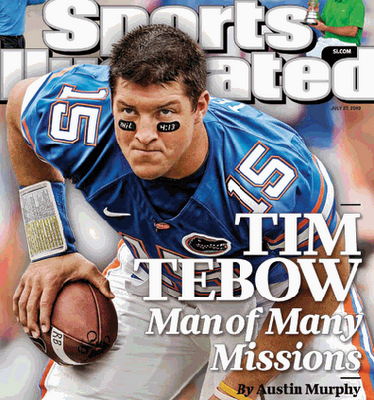
And so on… It was like a bunch of guys arguing about SEC football and whose team is the best.

Do we do the same thing today? Maybe not verbally but we certainly have our ideas on what makes a “great disciple.” And we are constantly measuring ourselves by other people. “My family is in better shape than theirs.” “I obviously serve more than that person.” “That person is such a hypocrite. At least I am honest about myself.” “Look at how much I witness. No one else is sharing their faith like me.” “The church is full of such shallow people. No one has a passion for the Bible like I do.” And on it goes.

So Jesus takes the opportunity to instruct His disciples. He brings a little child into their midst. It is a child old enough to stand on his own but young enough to be called a “little child” (Greek, paidion). It is probably a toddler. And as the disciples look at this little child, Jesus says, “Mark this down as true. Unless your heart attitude changes and you become like a little child, you will by no means enter the kingdom of heaven.”

Whoa.

What Jesus did in setting a child forward as an example for adults to follow was shocking in His day. People of the ancient Near East regarded children as inferior to adults. They did not receive the consideration that adults enjoyed until they reached adult status. Children were to look to adults as examples to follow. Now Jesus turned the tables and urged His disciples to follow the example of a child. To do so would require humility indeed (Tom Constable).

What is it about a child that makes them such an example to us? It is not their supposed innocence. They are born sinners just like all of us are. I don’t even think it is their humility so to speak. Children can be as selfish as any of us. I think the primary issue is child-like dependence. When a child is hurt or fearful or sick or just looking to be held, what do they do? They stretch out their arms toward their parent and long to be embraced.

Everything a child has is a gift from his parents.

I think Jesus is taking the disciples right back to the Sermon on the Mount. Do you want to be part of My kingdom? Then you must recognize yourself as a destitute beggar. You must mourn over your sin, submit your will to me, and hunger and thirst for My righteousness. You must hold out empty hands and long to be embraced by Me.

Somewhere along the way the disciples had forgotten that. As they followed Jesus more and more, they began to depend on Him less and less. They stopped talking about His greatness and started wondering about their own.

Jesus makes it clear that they need to “turn” from a self-focused, self-reliant, self-glorification and “become” like little children, dependent, teachable, and hungry for the Lord.

The only people in Messiah’s kingdom are those who have entered by grace.

Lord, humble my heart. Bring me back to Yourself. It is so easy for me to focus on myself, to depend on myself, to compare myself to others. May my eyes be only on You. May I open up empty hands and be filled with Your Spirit. Give me a child-like faith and a child-like joy today.

Posted in Matthew Devotionals | Leave a comment

Traffic Court and 9/11

Most people remember where they were on 9/11. I remember where I was on 9/10.

In April of 2001, I got a traffic ticket. No biggie, right? Well, to me it was.

I know every "violator" is innocent in their own mind but this is the story to the best that I remember it…and my wife, who is much more objective than me, can verify it.

My family and I had just dropped off a friend at the airport in Philadelphia. I had my three year old and one year old sons in the back seat. My pregnant wife in the front seat. We were driving back home. It was Saturday night, early dusk, and we were not in a hurry.

About two miles from our house, we came to a traffic light in the little town of South River. It was the intersection of Reid and Main Streets, an exceptionally wide intersection since the two roads that cross there are at a catty corner. The speed limit through the town was 25 mph. I was putting along at this speed.

As I neared the intersection, the light at the beginning of the intersection turned yellow. I was too close to stop so I continued going through. But as I passed under the light at the end of the intersection, it turned red.

I remember commenting to Liz. "Wow, that was a quick light!"

No sooner had I said that when blue lights started flashing in my rear view mirror. For a second, I hoped they would pass by but instead they settled in right on my bumper. I pulled over.

At this point I made the cardinal mistake in any encounter with a police officer during a traffic violation. I claimed innocence.

"What did I do?" I said…with an innocent look and an incredulous voice.

The lady officer shot back her reply. "Sir, you just blew through that light!"

Okay, I have sped up on many occasions to make it through a yellow light.  I know what it is like to "blow through" a light. But this was not one of those cases. There was no hurry. No sense of getting home faster. No angst at the world. I was enjoying the time…until that moment.

The more I stated my case, the more I angered the police lady. And by the end of our friendly conversation, I had a traffic ticket and a court date.

I was not a happy camper.

My first court date was May 14. Then it got rescheduled to June 25. Part of me thought that I should just go in and pay the ticket. End the whole ordeal. But my sense of justice, and my realization of the increased insurance costs, started to get the best of me.

I had to go back and look at that traffic light. I did a few days later. I noticed that it turned from yellow to red incredibly quick. I timed it. 3 seconds. Out of curiosity I timed the other lights in town. 4 seconds.

An internet search led me to an article entitled "A Little Bit of Yellow." It talked about cities changing one light in town to a shorter yellow and then stationing cops nearby. The article concluded with these words, "The short yellow trap is a gold mine for enterprising cities."

I looked at the new South River courthouse under construction up the road and nodded my head in righteous agreement.

The next few weeks and months had me doing internet research, talking to my lawyer brother-in-law in another state, and finding out that I wasn't the first or the last with a traffic violation at that intersection. In fact, as I stood in line to see the district attorney, the person in front of me and behind me had the exact same traffic violation! It was too much to swallow. I was not only standing up for my rights but for all those who had suffered injustice at the intersection of Reid and Main.

I pleaded innocent with the DA and another court date was set for July 30. Then it was rescheduled again to September 10.

By the time the court date rolled around, I had a whole manila folder of information. Pictures of the traffic light…even a video of it if the judge wanted to see it. A diagram of the intersection with my best measurements. And a mathematical formula showing that it was technically impossible to obey the speed limit and make it through that long intersection under a three second yellow. And, best of all, my eight month pregnant wife was ready to testify on my behalf.

I guess I had watched too many court dramas on TV.

Before I could even bring out my diagram, the DA raised about 14 objections to the judge. "Objection, Your Honor, the defendant does not have  a certified survey of the intersection." "Objection! He cannot submit that evidence to the court!" "Objection! He cannot prove those calculations!" "Objection! Objection! Objection!" I was so flustered after about the fourth objection that I could barely speak.

My wife did much better. She has a little more lawyer blood in her veins. But in the end, the judge wasn't impressed. Guilty as charged. Pay the fine. He did waive the court fees as a gesture of kindness for my efforts.

I paid the ticket and went home.

But I couldn't sleep. The whole thing just reeked in my mind. So I got up in the middle of the night and wrote a letter to the editor. I entitled it "South River's Cash Cow" and I couldn't wait to mail it the next day to the little local newspaper.

The next morning was 9/11.

My little crusade against short yellow lights in small town USA suddenly didn't seem important any more.

"Perspective" is the one word that keeps coming to my mind as I think of 9/10 and 9/11/2001. What consumed my mind on 9/10 was shown for what it was on 9/11. Petty. Self-absorbed. Inconsequential. And a waste of my time, thoughts, and energy.

It's sad that it often takes a tragic event like 9/11…or a feared diagnosis…or the loss of a friend or loved one…to get our attention and slap us back to what really matters. We are so drawn to the trivial..the temporal…that we miss the essential…the eternal.

I remember 9/11.

Being in NJ, the whole event is still surreal in my mind. Calling friends who I knew worked in NYC and simply being glad to hear their voice. Joining with my brothers and sisters in Christ for a packed prayer service. Driving to a ferry terminal in NJ to volunteer to help. Being less stressed by the little worries of the day. Hugging my wife and kids longer…tighter. Crying more. Feeling more. Living more. Loving more.

I wish those things didn't fade in my mind so quickly.

I wish I focused more on the priorities of 9/11 than the pettiness of 9/10.

Posted in Random Thoughts | Leave a comment

Feeding the “Dogs”

32 Now Jesus called His disciples to Himself and said, “I have compassion on the multitude, because they have now continued with Me three days and have nothing to eat. And I do not want to send them away hungry, lest they faint on the way.”

33 Then His disciples said to Him, “Where could we get enough bread in the wilderness to fill such a great multitude?”
34
Jesus said to them, “How many loaves do you have?”
And they said, “Seven, and a few little fish.”

35 So He commanded the multitude to sit down on the ground. 36 And He took the seven loaves and the fish and gave thanks, broke them and gave them to His disciples; and the disciples gave to the multitude. 37 So they all ate and were filled, and they took up seven large baskets full of the fragments that were left. 38 Now those who ate were four thousand men, besides women and children.

In Matthew 14, Jesus fed 5000+ people miraculously. And now in Matthew 15, He feeds 4000+ people miraculously. It seems like a repeat of the same miracle but this time there is a huge difference. The first time Jesus fed predominantly, if not entirely, Jewish people. This time He feeds predominantly, if not entirely, Gentile people. Same miracle…vastly different audience.

We don’t realize how big of a deal this is.

The Gentiles were considered “unclean” to the average Jewish person in Jesus’ day. They were called “dogs.” To be a Gentile was to be separated from God. The only hope for a Gentile was to become a Jew. So the fact that Jesus enters Gentile territory is in itself a big deal. He begins near Tyre and Sidon and heals the Canaanite woman’s daughter. Then He takes a long trek to the area of the Decapolis and duplicates a great healing ministry and a great feeding miracle with a Gentile audience.

The “crumbs” of blessing turn into a downpour.

Simon the Zealot and Judas Iscariot have to be dying inside! The Gentiles are good for conquering, not for healing, feeding, and blessing. If the Samaritans (half-Jew) were bad, then the Gentiles were even worse.

It’s hard for me to totally “feel” the impact of this Gentile ministry on the psyche of the disciples. I know it will take Peter all the way until Acts 10 before he finally understands God’s heart for the Gentiles…and even then he has a relapse that Paul has to rebuke in Galatians 2. It would be like Jesus entering a black neighborhood in the racially charged days of the 60’s…or perhaps a Muslim territory or a “gay neighborhood” today. It is not what we are expecting. It is with people that we struggle to be around…much less that we want to bless.

I find it interesting that after three days, Jesus says, “I have compassion on the multitude…”

I almost wonder if Jesus was hoping that after three days the disciples would start to “get it,” that their hearts would start to open with compassion toward these needy, hungry people. But apparently they don’t.

In Matthew 14, it is the disciples who encourage Jesus to send the crowd away after one day so that they can eat. Even if they don’t understand Jesus’ power, they are at least concerned for their fellow countrymen’s lack of food. Here, after three days, they are still not too concerned. They just want to leave. They are ready for this little Gentile mission trip to end. “Are You ready to go yet, Jesus?”

I think that’s why the disciples have no idea how they are going to feed the crowd. Commentators sometimes wonder why the disciples would act so incredulous at feeding the multitude when Jesus had just done it a few months before. Did they forget that quickly? Were they that dense? Well, perhaps. Matthew 16 is going to confirm their cognitive density. But, on another level, I don’t think they had any idea that Jesus would duplicate His feeding miracle with Gentiles. When Jesus fed the 5000, it was a sign pointing back to God’s provision of manna in the wilderness. It was another validation of Jesus as the Jewish Messiah, as one greater than Moses. But that was for Jews. This is a crowd of Gentiles. Why would Jesus do the same thing here? He is not the Messiah of the Gentiles, is He?

Well, actually, He is the Jewish Messiah but He came down from heaven to give His own body, the bread of life, as a sacrifice for all mankind…Jew and Gentile, slave and free, male and female.

There’s another rich lesson in this passage. Not only does Jesus have a heart of compassion for all people, but He calls us to be involved in His ministry of compassion. He calls us to feed and minister to the multitudes, not just physically…but, more importantly, spiritually.

And the task is way too big for us.

As I look around this world, even around this city, I am overwhelmed. So many needs. So many hurting people. And I feel so inadequate, so powerless. I feel barely able to handle my own problems, much less bear the burdens of hundreds of individuals around me.

But that’s where God wants me…with a broken heart for people…and a recognition that only through His strength and power can I ever hope to minister to any of them. I take what little I have, bring it to Him, allow Him to break and multiply it, and then He gives it back to me so that I can use it to bless others. It may not be much…but in Christ’s hands it can have a far-reaching impact. I just have to keep coming back to Him.

I am the vine, you are the branches. He who abides in Me, and I in him, bears much fruit; for without Me you can do nothing. (John 15:5)

Posted in Matthew Devotionals | Leave a comment

The Incomprehensible Love of God

In discussing the particulars of Calvinism, I have to confess that I probably won’t add too much to the discussion. This debate has been going on for 400+ years so just about every argument for and against Calvinism has been discussed by someone at some point.

So why bother?

1) Theological discussion is good and stretching. Theology used to be considered the “queen of the sciences” and the history of our Western universities (and science itself) stems from a theological worldview. It is only in recent times that we have considered theological discussion to be “much ado about nothing” while we spend our time debating the “important matters” of politics and sports. But what greater subject is there than God? And what greater value is there than wrestling with God, pondering His revelation, and exploring the ultimate issues of life, meaning, and eternal salvation?

2) Tozer once said that “What comes into our minds when we think about God is the most important thing about us.” We were created to worship God and reflect His glory. If we are not worshiping Him, then we are worshiping something else. And we are becoming who or what we are worshiping (Psalm 115:8). Thus, a distorted view of God leads to a distorted life…while a truer view of God leads to a truer humanity.

So the debate is important…particularly as it affects our view of the character of God.

Calvinists agree. In fact, they usually frame the debate as an assault on God’s sovereignty. To question Calvinism is automatically to demean God’s power and exalt man’s will. This is not a fair assessment. I don’t question Calvinism because I want to dethrone God. I question Calvinism because I don’t think it adequately deals with the incomprehensible love of God as revealed in Scripture.

Limited atonement is a case in point.

When I was in Bible college, I remember one of my Calvinistic teachers saying that limited atonement was more of a logical conclusion from Calvinism than a biblical one. Wow. Quite an admission.

The logic goes like this.

  1. Since God unconditionally chose who would be saved and who would be damned before the foundation of the world.
  2. And since all of humanity is dead in sin, deserves God’s wrath, and can only be saved by God’s action alone.
  3. Then, when Christ died on the cross, the extent of His death and the real intent of God’s love was only for the elect.

It makes logical sense. It seems airtight. Unfortunately the biblical data doesn’t support the third point.

For God so loved the world that he gave his one and only Son, that whoever believes in him shall not perish but have eternal life (John 3:16).

All we like sheep have gone astray; we have turned, every one, to his own way; and the LORD has laid on Him the iniquity of us all (Isaiah 53:6).

The next day John saw Jesus coming toward him, and said, “Behold! The Lamb of God who takes away the sin of the world!” (John 1:29)

For this is good and acceptable in the sight of God our Savior, who desires all men to be saved and to come to the knowledge of the truth. For there is one God and one Mediator between God and men, the Man Christ Jesus, who gave Himself a ransom for all, to be testified in due time (1 Timothy 2:3-6).

For to this end we both labor and suffer reproach, because we trust in the living God, who is the Savior of all men, especially of those who believe (1 Timothy 4:10).

My little children, these things I write to you, so that you may not sin. And if anyone sins, we have an Advocate with the Father, Jesus Christ the righteous. And He Himself is the propitiation for our sins, and not for ours only but also for the whole world (1 John 2:1-1).

Ironically, Calvin himself was too honest of a theologian to explain all these verses away. A recent Ph.D. dissertation study has shown that Calvin almost certainly did not subscribe to a view of limited atonement, http://calvinandcalvinism.com/?p=230.

J.C. Ryle, a 19th century pastor and Calvinistic theologian, said this in regard to John 3:16.

Those who confine God’s love exclusively to the elect appear to me to take a narrow and contracted view of God’s character and attributes. They refuse to God that attribute of compassion with which even an earthly father can regard a profligate son, and can offer to him pardon, even though his compassion is despised and his offers refused. I have long come to the conclusion that men may be more systematic to their statements than the Bible, and may be led into grave error by idolatrous veneration of a system (Expository Thoughts on the Gospels, 3:157).

My sentiments exactly.

So why do strict Calvinists fight against the concept of universal atonement, against the thought that Christ’s death was for all the sins of humanity and satisfied God’s wrath (propitiation) for the whole world?

Because now there is a problem. If God loves the whole world (John 3:16) and desires all to be saved (1 Tim 2:4) and Christ’s death atoned for all sin (Isaiah 53:6, John 1:29, 1 John 2:1-2), then on what basis does God still judge and condemn the unelect?

John Owen, the great 17th century Puritan theologian and perhaps strongest advocate of limited atonement, theorized that such a concept defies logic and makes there be a double payment for sin since Christ paid for sins that the unelect will still suffer for in hell. Owen believed that the doctrine of a universal atonement could only lead to universalism…that all people are eventually saved.

So the logic of the strict Calvinist system struggles under the weight of the cross and the love of God. Even D.A. Carson recognizes the conundrum that the universal love of God poses for Calvinism. When I heard him speak at Dallas Theological Seminary, his topic was the “Difficult Doctrine of the Love of God.” How can God express unending, unyielding wrath against those whom He says He loves, for whom Christ died, and to whom He could unconditionally give salvation if He wanted to?

Difficult indeed.

That’s why I think this great salvation of ours can’t be reduced to an airtight theological system. Here are some things we see from the basic teachings of Scripture.

  1. God created all people. Every person bears His image.
  2. All people have turned away from God, are dead in sin, and incapable of saving themselves.
  3. God is holy and just and must judge sin.
  4. In His great love and mercy, God sent His Son, Jesus, to die for the sins of all people.
  5. The Spirit works in the heart of all people to convict them of sin, righteousness, and judgment and point them to their need for Jesus.
  6. All people, through the work of the Spirit, must make a response to this offer of grace in order to experience God’s salvation.
  7. We are to take this message of grace and salvation to all people.

We can rightfully acknowledge that, behind the scenes, the interplay between God’s sovereignty, His love, the Spirit’s work, and man’s response is hard to discern and open to debate. But let’s continue to allow Scripture to expand our amazement at God’s wisdom and knowledge (Romans 11:33-36) rather than let any system “narrow and contract our view of God and His attributes.”

Calvinism reminds us of God’s power and sovereignty. God is in control. No scheme of man can thwart His plan. He knows all things and works all things according to the counsel of His will. Because of His sovereignty, I can rest in Him (particularly in a tumultuous age) and be secure in His salvation. As someone has said, “Because I think like a Calvinist, I can sleep at night.”

But Arminianism keeps Calvinism from going too far, from downplaying, limiting, or over-analyzing the love of God. It keeps us from making God’s universe an “engineer’s universe” without the mysteries and grandeur of a divine lover’s heart. And, in the end, even a strict Calvinist has to live like an Arminian, making daily choices with their will either to live for self or live for God, to love Him supremely or love other things, to love others (even our enemies) with humility and grace or to cut off those who offend us, irritate us, or disagree with us.

And I believe that when both sides of the coin are acknowledged in Scripture and received in humility, then God’s love is not difficult. It is simply amazing.

Posted in Calvinism vs Arminianism | Leave a comment

Calvin’s Institutes & God’s Sovereignty

Calvin’s book, Institutes of the Christian Faith, is one of the most influential theological books ever written. Calvin wrote the first edition of this book in 1536, approximately three years after he came to faith in Jesus Christ. The original book was six chapters long and printed in such a way that it could be carried in a person’s pocket. Its purpose was to summarize the basic teachings of the Bible and Protestantism in a format that people could understand.

Calvin constantly revised and added to this book and, by the time of his death in 1564, it was eighty chapters long and close to 1000 pages. The book’s impact on the Reformation, and subsequent Protestant theology, is practically unparalleled.

I confess that I have not read the whole book. A lot of it is hard to read and tied to Calvin’s times. I have scanned large portions of it and read a Reader’s Digest version of it produced by Hugh Kerr (Calvin’s Institutes: A New Compend).

Much of what I have read I have liked and been impressed with. Calvin was an incredible thinker and theologian. Here are some of the quotes that I highlighted and starred:

…We cannot have a clear and complete knowledge of God unless it is accompanied by a corresponding knowledge of ourselves (I.xv.1).

Here, then, is what God’s truth requires us to seek in examining ourselves: it requires the kind of knowledge that will strip us of all confidence in our own ability, deprive us of all occasion for boasting, and lead us to submission (II.i.2).

For God’s mercy is revealed in Christ to all who seek and wait upon it with true faith. In the precepts of the law, God is but the rewarder of perfect righteousness, which all of us lack, and conversely, the severe judge of evil deeds. But in Christ His face shines, full of grace and gentleness, even upon us poor and unworthy sinners (II.vii.8).

We have in his death the complete fulfillment of salvation, for through it we are reconciled to God, his righteous judgment is satisfied, the curse is removed, and the penalty paid in full (II.xvi.13).

While we teach that faith ought to be certain and assured, we cannot imagine any certainty that is not tinged with doubt or any assurance that is not assailed by anxiety. …Believers are in perpetual conflict with their own unbelief. …He who, struggling with his own weakness, presses toward faith in his moments of anxiety, is already in large part victorious (III.ii.7).

You will never attain true gentleness except by one path: a heart imbued with lowliness and with reverence for others (III.vii.4).

Faith righteousness so differs from works righteousness that when one is established the other has to be overthrown. …So long as any particle of works righteousness remains some occasion for boasting remains with us. Now, if faith excludes all boasting, works righteousness can in no way be associated with faith righteousness (III.xi.13).

Good stuff. And here is another quote I highlighted before Calvin enters into his discussion of predestination and election.

Human curiosity renders the discussion of predestination, already somewhat difficult of itself, very confusing and even dangerous. No restraints can hold it back from wandering in forbidden bypaths and thrusting upward to the heights. If allowed, it will leave no secret to God that it will not search out and unravel. …Let us not be ashamed to be ignorant of something in this matter, wherein there is a certain learned ignorance (III.xxi.1-2).

I think Calvin’s words are right on target in this regard. And essentially that is all I am arguing in the debate between Calvinism-Arminianism. Let’s not be ashamed to admit our ignorance in some areas and let’s not try to unravel every tension between God’s sovereignty and His incomprehensible love toward humanity.

Notice I didn’t put the tension between God’s sovereignty and man’s free will. I don’t think the tension lies here. There is only one free will in the universe and that is God. Our God is in heaven; He does whatever He pleases (Psalm 115:3). God is absolutely sovereign. No question. He can do whatever He wants. I think that is Paul’s primary message in Romans 9. Who are we to tell God how He is supposed to do things?

In that sense, today’s resurgence of Calvinism is a good thing, a good corrective. In a humanistic society, like the Renaissance age (and our own), a good dose of God’s sovereignty has a way of humbling us and reminding us that we are not God, we are not immortal, we are not omniscient, and we can’t even control our own bodies much less the universe.

But I believe that Calvin’s Institutes is deficient in at least one area…God’s love. Yes, Calvin does talk about God’s love. It’s impossible not to. But it is not a predominant theme in his book.

I did a little word study using a pdf of Calvin’s Institutes. The term “righteous” is used 1081x in his book. The term “holy” is used 720x. The term “power” is used 844x. Most of the time in reference to God. The term “love,” however, is used 369x and the majority of those times are in reference to our command to love God and our neighbor not to God’s love toward us. 1 John 4:7-8, Beloved, let us love another, for love is of God; and everyone who loves is born of God and knows God. He who does not love does not know God, for God is love, is not referenced or quoted one time in his 1000 pages of theology. Not one time. Thus, the simple concept that “God is love” doesn’t get mentioned. Doesn’t that seem just a little unbalanced?

Calvin seems to focus more on God’s power, righteousness, and holiness than His love. And I think that reflects Calvin’s personality to some degree (see my post on Calvin’s Love Life)…and his times.

I read a biography about Calvin by T.H.L. Parker. It is considered one of the more scholarly accounts of Calvin’s life. Parker summed up Calvin’s life in one sentence: Calvin was a man of order and peace who was born into a world of conflict (345).

The 16th century was a tumultuous time in world history (very much like our own). Almost every category of life was being challenged and changed. And in the midst of this upheaval and uncertainty, Calvin clung to the power and sovereignty of God. Amen and amen! But at the same time, by over-emphasizing one aspect of God’s character, we tend to lessen another aspect of God’s character. And in the case of Calvin, I think he limited and over-rationalized the incomprehensible passion and love of God. ..not just for believers but for all of humanity.

Bottom line, Calvin tried to unravel and explain what he should have left in the realm of mystery and wonder.

In my next post, I plan to look at the doctrine of limited atonement which I believe is at the crux of the discussion of Calvinism.

Posted in Calvinism vs Arminianism | Leave a comment